A powerful safety message of the day can remind someone to pause, recognize a hazard, and make a better decision before starting work. Whether you manage a construction crew, supervise a warehouse, work in an office, or lead a manufacturing team, small safety reminders can help keep important precautions in everyone’s mind.
I believe the best safety messages do more than repeat rules. They connect everyday actions with something everyone values: going home healthy and safe. You can use these messages in morning meetings, toolbox talks, employee emails, break rooms, workplace signs, or daily team chats.
Below are original safety messages covering general workplace safety, personal protective equipment, slips and falls, equipment, electrical hazards, fire prevention, lifting, heat, fatigue, and teamwork. Choose a message that matches the day’s work, discuss the relevant hazards, and reinforce your organization’s safety procedures.
General Workplace Safety Messages of the Day
Workplace safety begins with everyday decisions. These daily safety reminders are suitable for offices, warehouses, retail stores, factories, and other work environments. Use them to encourage employees to stay alert, identify hazards, and make safe choices throughout the shift.
- “Start every shift with safety in mind. A few moments spent identifying hazards can help prevent a serious mistake.”
- “Your safety is more important than a deadline. Take the time to complete every task using the correct procedure.”
- “Look around before you begin. Recognizing a hazard early gives you a chance to address it before someone gets hurt.”
- “Never assume an area is safe just because you have worked there many times. Conditions can change without warning.”
- “Make safety part of every decision, not just something you discuss during meetings.”
- “If a task feels unsafe, stop and ask questions before moving forward. Understanding the risk is better than guessing.”
- “Keep your attention on the task in front of you. Distractions can turn an ordinary moment into a dangerous one.”
- “A safe workplace depends on everyone. Take responsibility for your actions and look out for the people around you.”
- “Report hazards as soon as you notice them. A problem identified today should not become an accident tomorrow.”
- “Your shift is not truly successful unless you finish your work and return home safely.”
Safety Messages About Personal Protective Equipment
Personal protective equipment (PPE) helps protect workers from specific workplace hazards when selected, fitted, maintained, and used correctly. These reminders are useful for construction sites, manufacturing facilities, laboratories, warehouses, and maintenance teams.
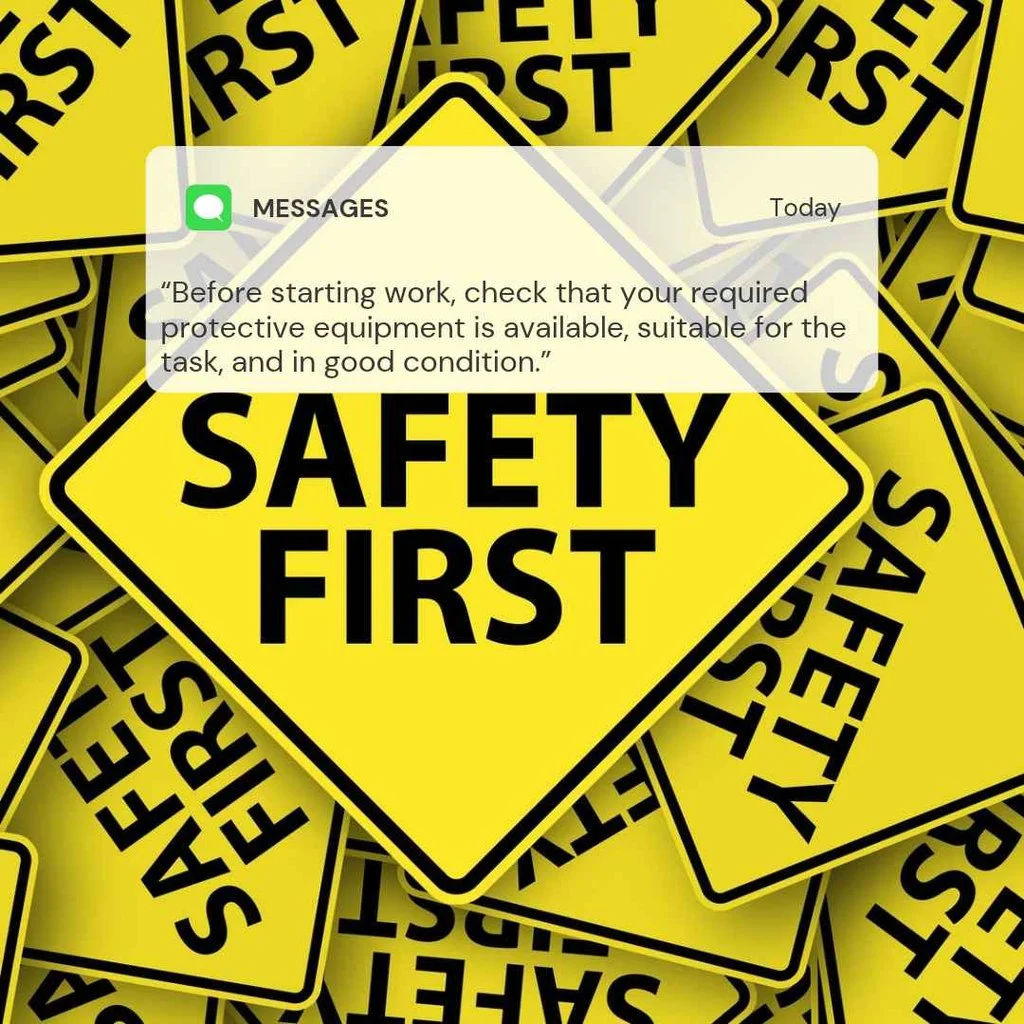
- “Before starting work, check that your required protective equipment is available, suitable for the task, and in good condition.”
- “Safety glasses protect your eyes from hazards you may not see coming. Wear the eye protection required for your work.”
- “The right gloves can help protect your hands, but only when they are appropriate for the material and task.”
- “Wear hearing protection wherever your workplace assessment and safety procedures require it. Protect your hearing before damage occurs.”
- “A hard hat is only useful when it is suitable for the hazards and properly maintained. Inspect it before use.”
- “Never ignore damaged PPE. Replace defective equipment according to your workplace procedures before continuing the task.”
- “Respiratory protection must match the hazard and be used under the required protection program. Never assume any mask will protect against every substance.”
- “Wear footwear designed for your work environment. The right protection can help reduce exposure to slips, falling objects, and other job-related hazards.”
- “Do not modify your protective equipment to make it more comfortable. Ask your supervisor about a safe fit or suitable alternative.”
- “Before entering a hazardous work area, confirm that you have the required PPE and understand how to use it correctly.”
Safety Messages About Slips, Trips, and Falls
Slips, trips, and falls can happen in offices, stores, kitchens, warehouses, and outdoor work areas. These daily safety messages encourage good housekeeping, awareness, and proper fall prevention practices.
- “Keep walkways clear of boxes, tools, cords, and other obstacles. A clear path helps everyone move safely.”
- “Clean up spills promptly using the approved procedure, and warn others or restrict access until the area is safe.”
- “Slow down on wet or uneven surfaces. Rushing through a hazardous area can increase the chance of a fall.”
- “Use a suitable ladder for the task, inspect it before use, and follow its instructions. Never improvise with unstable furniture.”
- “When working at height, use the required fall protection and follow the approved procedures for your specific task.”
- “Pay attention to changes in floor level, loose mats, damaged flooring, and poorly lit walkways.”
- “Keep one hand free when possible while using stairs, and use the handrail. Avoid reading messages while walking.”
- “Store materials where they belong instead of leaving them in aisles or near emergency exits.”
- “Wear footwear appropriate for the surface and working conditions. Do not assume yesterday’s conditions are the same today.”
- “If you notice a damaged ladder, missing guardrail, or unsafe walking surface, report it and keep others away as appropriate.”
Safety Messages About Tools, Machinery, and Equipment
Machinery and tools require attention, training, and proper safeguards. These messages work well for maintenance teams, construction crews, production workers, and equipment operators. Adapt them to the equipment and procedures used at your workplace.
- “Inspect tools and equipment before use. If something is damaged, defective, or behaving unusually, stop and report it.”
- “Only operate machinery you are trained and authorized to use. Confidence is not a substitute for proper training.”
- “Never remove or bypass a machine guard to save time. Follow the approved procedure for addressing equipment problems.”
- “Keep your hands and clothing away from moving parts, and follow the machine’s required safeguards.”
- “Before maintenance or clearing a jam, follow the applicable energy-control and lockout/tagout procedures. Never assume equipment is safe because it has stopped.”
- “Use the right tool for the job. An improvised solution can introduce risks that a suitable tool would avoid.”
- “Never leave operating equipment unattended unless the procedure specifically permits it and the equipment is in a safe condition.”
- “Keep people outside designated equipment operating zones, and communicate clearly with nearby coworkers before moving machinery.”
- “Follow the manufacturer’s instructions and your workplace procedures when inspecting, operating, and maintaining equipment.”
- “If a tool makes an unusual sound, vibrates unexpectedly, or develops a fault, stop using it and notify the appropriate person.”
Electrical Safety Messages of the Day
Electrical hazards can cause serious injuries, fires, and equipment damage. These reminders are appropriate for offices, workshops, construction sites, and facilities where electrical equipment is used. Electrical repairs should be performed only by qualified and authorized personnel.
- “Never use a damaged power cord or plug. Remove defective equipment from service according to workplace procedures.”
- “Keep electrical equipment away from water unless it is specifically designed and approved for the conditions.”
- “Do not overload outlets or extension cords. Follow the electrical requirements for the equipment you use.”
- “Treat exposed wires and damaged electrical panels as serious hazards. Keep clear and report the problem immediately.”
- “Never attempt electrical repairs unless you are qualified and authorized to perform the work.”
- “Before using a portable electrical tool, inspect its cord, plug, and housing for visible damage.”
- “Keep access to electrical panels clear so authorized personnel can reach them safely when needed.”
- “Never assume a wire or power line is de-energized. Follow the required verification and electrical safety procedures.”
- “If electrical equipment sparks, smells burnt, or overheats, stop using it if safe to do so and report the issue.”
- “Use approved energy-isolation procedures before servicing electrical equipment. Verify the required safe condition before work begins.”
Fire Prevention and Emergency Safety Messages
Emergency preparedness helps employees understand how to respond when something goes wrong. Use these messages during safety huddles, emergency preparedness sessions, or routine workplace communications.
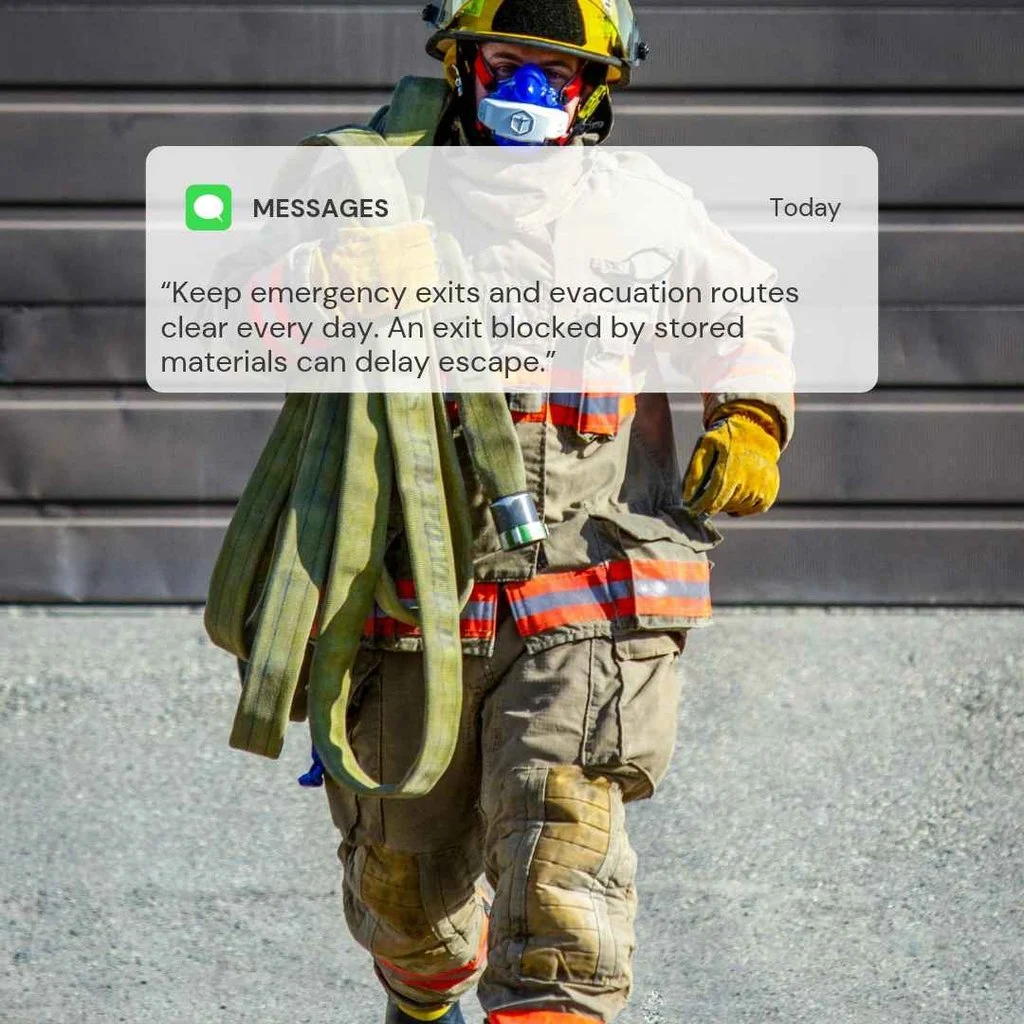
- “Keep emergency exits and evacuation routes clear every day. An exit blocked by stored materials can delay escape.”
- “Know the evacuation route from your work area before an emergency happens.”
- “Report damaged fire alarms, missing safety signs, and blocked fire equipment to the appropriate person.”
- “Never ignore a burning smell, smoke, or unusual heat coming from equipment. Follow your emergency reporting procedures.”
- “Know where the designated assembly point is and follow your workplace evacuation plan when an alarm sounds.”
- “Use a fire extinguisher only when you are trained, authorized, and it is safe to do so under your emergency procedures.”
- “Store flammable materials in approved locations and handle them according to their safety instructions.”
- “Never wedge open a fire door or disable an alarm to make everyday work more convenient.”
- “During an emergency, follow the established response plan, listen to instructions, and avoid returning to the building until authorized.”
- “Take emergency drills seriously. Practicing your response now can help you act more calmly when it matters.”
Safety Messages About Lifting and Ergonomics
Lifting, carrying, repetitive movements, and awkward working positions can contribute to workplace injuries. These reminders are useful for warehouse employees, delivery teams, office workers, and anyone who handles materials or performs repetitive tasks.
- “Before lifting an object, assess its weight, shape, stability, and your route. Ask for help or use suitable equipment when necessary.”
- “Keep the load close to your body when lifting, and avoid twisting while carrying it.”
- “Do not struggle with an object that is too heavy or awkward to handle safely. Use a team lift or mechanical aid when appropriate.”
- “Adjust your workstation so frequently used items are within comfortable reach and your posture supports the task.”
- “Take permitted movement breaks and vary repetitive tasks when possible to reduce prolonged strain.”
- “Push or pull loads using approved techniques and equipment rather than forcing an awkward movement.”
- “Keep storage areas organized so heavy items can be accessed without unsafe reaching or climbing.”
- “Report recurring pain, discomfort, or early signs of strain through the appropriate workplace process.”
- “Use carts, lifting devices, and other approved aids when they are available and suitable for the load.”
- “Plan the movement before you begin. A clear route and a stable grip can make material handling safer.”
Heat, Weather, and Outdoor Safety Messages
Outdoor workers and employees in hot indoor environments may face heat stress, changing weather, and other environmental hazards. Choose messages that match local conditions, the work being performed, and your organization’s safety plan.
- “On hot days, follow your heat-safety plan, drink water regularly, and take required rest breaks in appropriate areas.”
- “Know the warning signs of heat illness, including confusion, fainting, and unusual behavior. Get emergency help when serious symptoms appear.”
- “Do not ignore dizziness, weakness, or other signs of heat-related illness. Stop work and seek help according to your workplace procedures.”
- “Check the weather before outdoor work and adjust plans when lightning, strong winds, extreme temperatures, or storms create hazards.”
- “Dress for the conditions using the protective clothing required for your job. Make sure your equipment remains suitable for the weather.”
- “During cold weather, wear appropriate layers and follow procedures for preventing cold stress and frostbite.”
- “Never assume a work area is safe after a storm. Check for hazards such as unstable structures, standing water, and damaged power lines.”
- “Use sunscreen and other appropriate sun protection when working outdoors, alongside required job-specific PPE.”
- “Take changing weather seriously. Stop and reassess the task when environmental conditions make the planned work unsafe.”
- “Look out for your coworkers during extreme weather. Report signs of heat or cold illness promptly and follow the emergency response plan.”
Fatigue, Focus, and Mental Well-Being Safety Messages
Safe work depends on more than physical equipment. Fatigue, stress, distraction, and pressure can affect attention and judgment. These reminders help teams discuss human factors without blaming employees for raising concerns.
- “If fatigue is affecting your ability to work safely, speak with your supervisor and follow the appropriate process before continuing a hazardous task.”
- “Put your phone away when walking through active work areas or operating equipment. Your attention belongs on the task.”
- “Never let production pressure push you into skipping a required safety step.”
- “If you are unsure about an instruction, stop and ask for clarification instead of making a risky guess.”
- “Take your scheduled breaks and use them to rest when your job and workplace procedures allow.”
- “Speak up if stress, illness, or exhaustion is affecting your ability to perform work safely. Asking for support is responsible.”
- “Avoid rushing through repetitive tasks. Stay alert to changes in your surroundings, equipment, and workload.”
- “Give coworkers your full attention when they communicate a hazard or emergency instruction.”
- “A near miss is a chance to learn. Report it honestly so the team can investigate and address the underlying risk.”
- “Respect your limits and the limits of others. A safe team makes room for questions, concerns, and responsible decisions.”
Teamwork, Accountability, and Safety Culture Messages
A strong safety culture encourages employees to communicate, report hazards, and take shared responsibility. These messages are useful for supervisors, safety managers, team leaders, and daily toolbox talks.
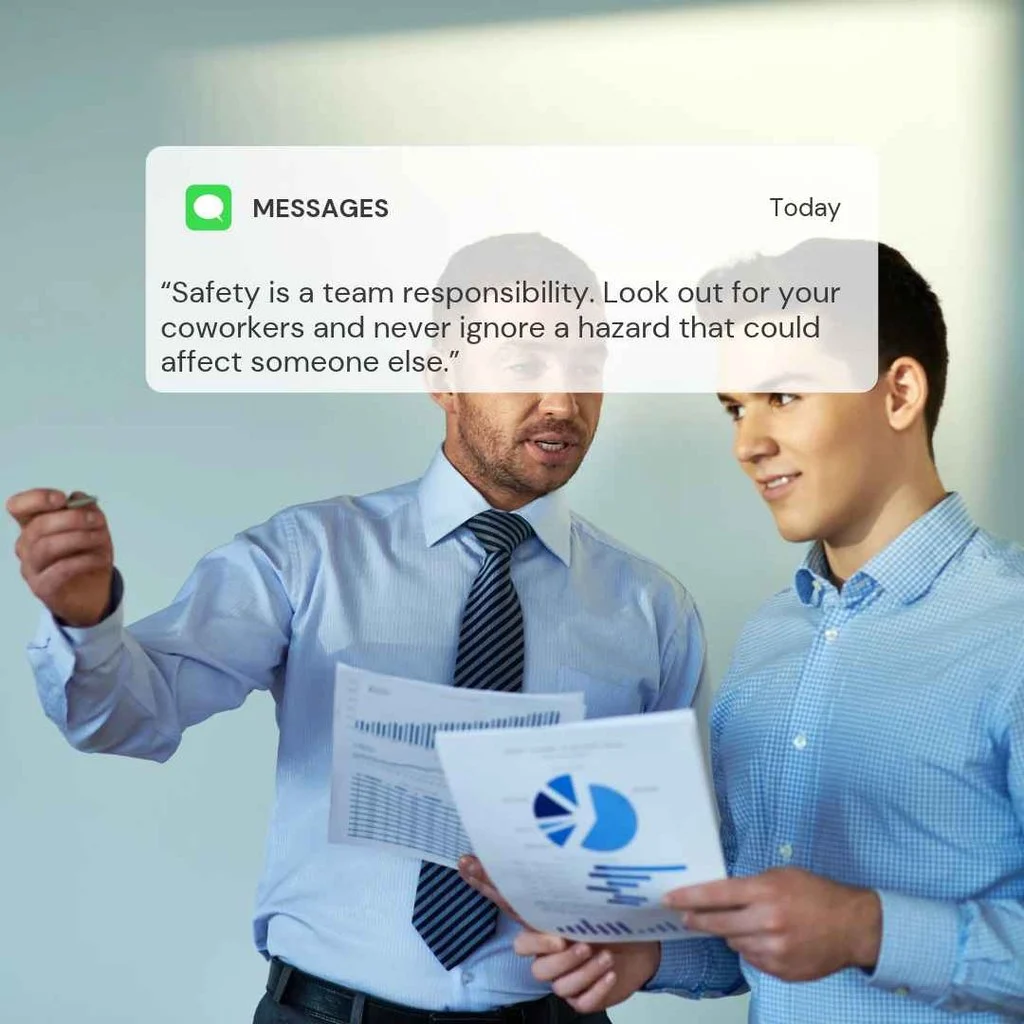
- “Safety is a team responsibility. Look out for your coworkers and never ignore a hazard that could affect someone else.”
- “Speak up when you see an unsafe condition. Respectful communication can help your team address problems before someone gets hurt.”
- “Thank the coworker who points out a hazard. Taking feedback seriously helps everyone learn and improve.”
- “Report near misses as well as injuries. Understanding what almost went wrong can help prevent a more serious incident.”
- “Never assume someone else has reported a problem. Follow your workplace reporting process and confirm that the concern is addressed.”
- “Supervisors set the tone by following safety procedures themselves. Lead by example, even when nobody is watching.”
- “New employees deserve clear instructions, proper training, and time to understand the hazards before performing unfamiliar tasks.”
- “If a job changes unexpectedly, pause and reassess the hazards with the team before proceeding.”
- “Recognize coworkers who make safe choices, report concerns, and help others follow established procedures.”
- “Make today’s safety commitment simple: identify one hazard, take the appropriate action, and help everyone finish the shift safely.”
Frequently Asked Questions
What is a good safety message of the day?
A good safety message of the day is a short, practical reminder that identifies a workplace risk and encourages a specific safe action. For example: “Inspect your tools before use, and report damaged equipment before starting the job.”
Why is a daily safety message important?
A daily safety message keeps a particular hazard or safe work practice in focus. When combined with appropriate training, hazard reporting, and workplace procedures, it can encourage employees to recognize risks and make safer decisions.
How long should a daily safety message be?
For a quick reminder, one to three sentences is often enough. A toolbox talk may need more time to explain a hazard, discuss controls, and answer questions. Keep the message appropriate for the risk and the audience.
What are the best safety topics for a morning meeting?
Useful topics include slips and falls, PPE, equipment inspections, electrical hazards, fire prevention, lifting techniques, heat illness, fatigue, and near-miss reporting. Select the topic based on the work planned and the hazards employees may encounter.
How do you make safety messages more effective?
Connect each message to a real task or hazard, explain the action employees should take, and invite questions. Use clear language, avoid repeating the same topic unnecessarily, and follow up when workers report a concern.
Can these safety messages be used for construction toolbox talks?
Yes. They can serve as opening reminders or discussion starters for construction toolbox talks. However, they do not replace task-specific hazard assessments, required training, site procedures, or applicable OSHA requirements. Use official resources such as the NIOSH Construction Toolbox Talks to support more detailed discussions.
Conclusion
A meaningful safety message of the day reminds every employee that safe work begins with the choices they make. From wearing the right PPE to reporting hazards, small actions can help prevent avoidable injuries. Choose messages that reflect your team’s actual tasks, working conditions, and daily risks. Use morning meetings and toolbox talks to encourage questions, share lessons, and reinforce safe procedures. Remember that safety is not just a rule to follow but a responsibility to yourself and your coworkers. When everyone takes safety seriously, the entire team has a better chance of finishing the day well. Work safely today, look out for one another, and make getting home safely the priority.
Meta Description: Find 100 safety message of the day examples for workplace meetings, toolbox talks, construction, PPE, and daily safety reminders to help protect every employee.

Hello, I’m Olivia Bennett. I have always believed that the right words can heal, motivate, and bring hope. I love writing and collecting meaningful quotes that help people through everyday situations. My work focuses on creating inspiring content that is easy to understand and valuable for readers around the world.
I write about relationships, confidence, gratitude, motivation, family, and emotional well-being. Every article I publish is written with the intention of helping someone smile or feel inspired.
Books:
- The Art of Meaningful Quotes
- A Collection of Inspirational Thoughts
 Ethan Carter